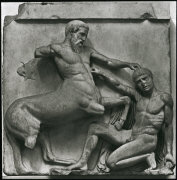
Parthenon metopes – Greek architecture
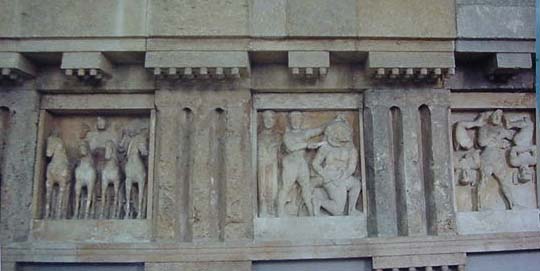
Metope from the Parthenon On the metopes, just under the roof, Phidias carved the battle between Lapiths (men) and centaurs (the Centauromachy), Greeks against Amazons (Amazonomachy), the gods against the [...]

Metope from the Parthenon On the metopes, just under the roof, Phidias carved the battle between Lapiths (men) and centaurs (the Centauromachy), Greeks against Amazons (Amazonomachy), the gods against the [...]
Parthenon pediment On the front of the Parthenon, in the triangular pediment, Pheidias carved the contest between Athena and Poseidon to be the main god of the city of Athens, [...]
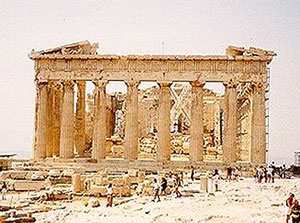
Parthenon columns, Athens The best temple ever So the architects of the Parthenon set out to make it the best temple ever. Most Greek temples had six columns across the [...]
Before the New Stone Age, people had lived in caves, but around 6000 BC people living in Greece began to build houses for themselves instead. At first they built small houses out [...]
Greek temple at Agrigento, Sicily What are triglyphs and metopes? Most Greek temples have a pattern under the pediment known as triglyphs and metopes. The triglyphs alternate with the metopes [...]
Bronze Age palace in Knossos, Crete Around 1700 BC, a great earthquake shook the island of Crete and knocked down the palaces (or big houses) that many people had been [...]
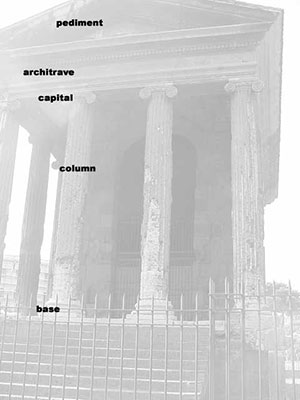
Ionic order: the parts of an Ionic temple A new way to build temples Around 500 BC, Greek architectural styles changed so that instead of building temples in the old [...]
Hellenistic architecture: Greek theater at Epidauros Enough temples already By the Hellenistic period, there were pretty much enough Greek temples. Most towns already had one, and many towns had a [...]
Greek architecture: a Bronze Age palace in Knossos, Crete The first buildings in Greece The earliest buildings people built in Greece, in the New Stone Age, are small houses or [...]
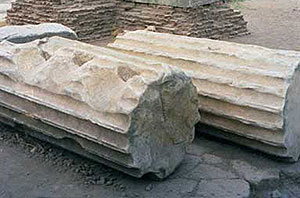
Fluted columns from the Forum in Rome What does it mean to be fluted? Most Greek and Roman columns (but not all) were fluted. That means they had narrow channels [...]